Sumber Foto: konstruksimedia.com
Teknologi
Teknologi Drone LiDAR Tingkatkan Efisiensi Inspeksi Jaringan Listrik
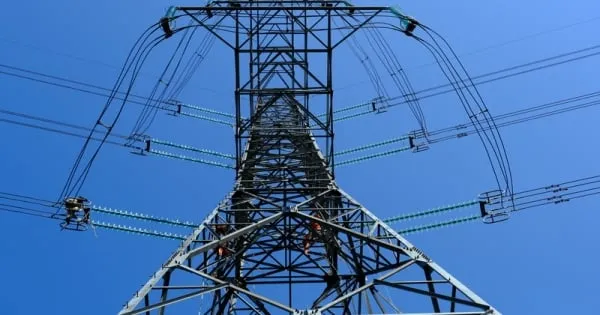
Media Construction – The use of drone and LiDAR (Light Detection and Ranging) technology further strengthens efforts to modernize national electricity grid inspections. This technology enables more accurate, safe, and efficient inspections of transmission lines, especially in geographically challenging areas with conventional methods.
Drones equipped with LiDAR sensors can capture high-resolution spatial data to map the condition of cables, transmission tower structures, and potential vegetation disturbances along power lines. This approach helps utility companies obtain a more detailed, data-driven picture of asset conditions.
High Precision with Power Line Follow Feature
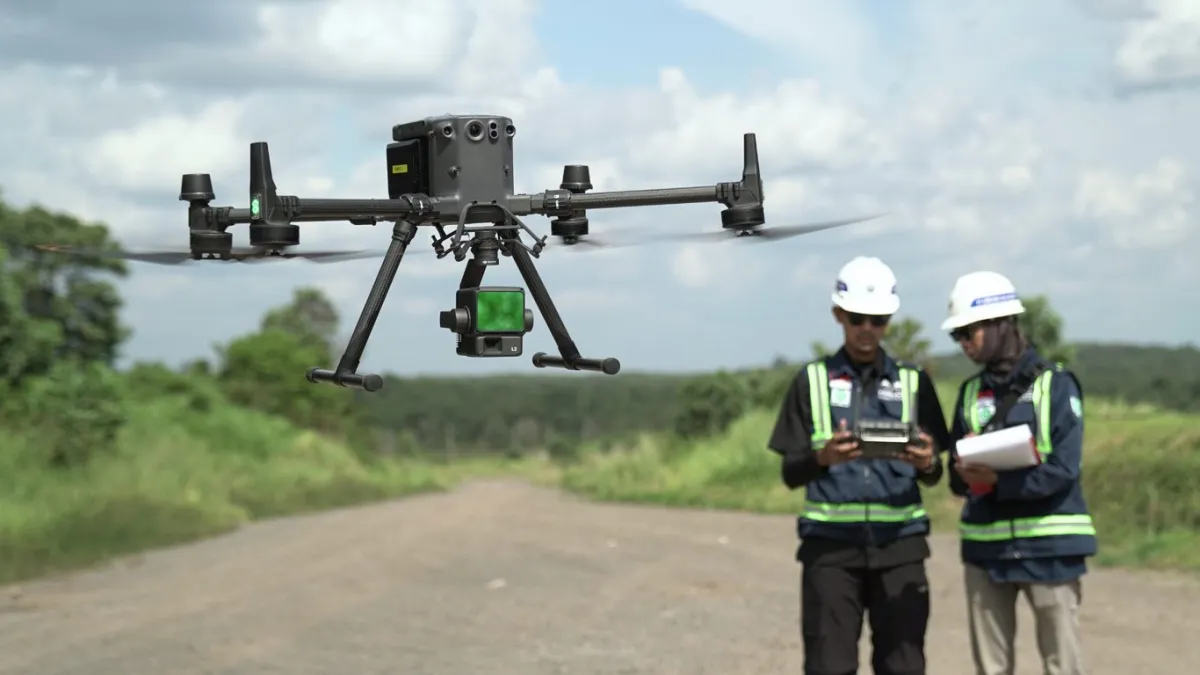
Halo Robotics is integrating the DJI M350 RTK drone platform with the Zenmuse L2 sensor for power grid inspections. One of the key features utilized is Power Line Follow, which allows the drone to automatically follow transmission lines.
This feature maintains flight stability around power lines while ensuring consistent data capture. This technology is considered effective, particularly in hilly areas or areas with dense vegetation, where manual inspection poses a high risk.
Risk Analysis of Safe Distance and Vegetation
The collected field data was then processed using DJI Terra software to generate spatial models, such as contours and land surface representations. These results were then analyzed further to assess the overall condition of the transmission line.
The information generated includes an evaluation of the safe distance between power lines and surrounding objects, identification of potential vegetation disturbances, and an indication of the stability of transmission tower structures.
"With the support of detailed LiDAR data, electricity utilities can obtain a more comprehensive picture of transmission line conditions for more accurate maintenance planning," said Halo Robotics.
Going forward, the development of next-generation platforms such as the DJI Matrice 400 combined with the Zenmuse L3 sensor is expected to expand power grid inspection capabilities. This technology promises improved mapping coverage, data quality, and operational efficiency.